Document Digital Signature & Verification
ekVerify
ECDSA cryptographic signing at the point of document issuance. QR-based instant verification at any downstream touchpoint. Any change to any character in the document invalidates the signature. One API call. Zero workflow change.
Market Differentiation
Why ekVerify Is Different
Existing document fraud solutions focus on onboarding biometrics — face matching at account opening, liveness detection, ID capture. These confirm the person presenting is genuine. They do not confirm the documents they present are genuine. ekVerify addresses a use case no existing vendor has solved: cryptographic integrity verification of bank-issued documents after issuance, at any downstream touchpoint, by any party, with no change to the issuing workflow.
How ekVerify Works
01
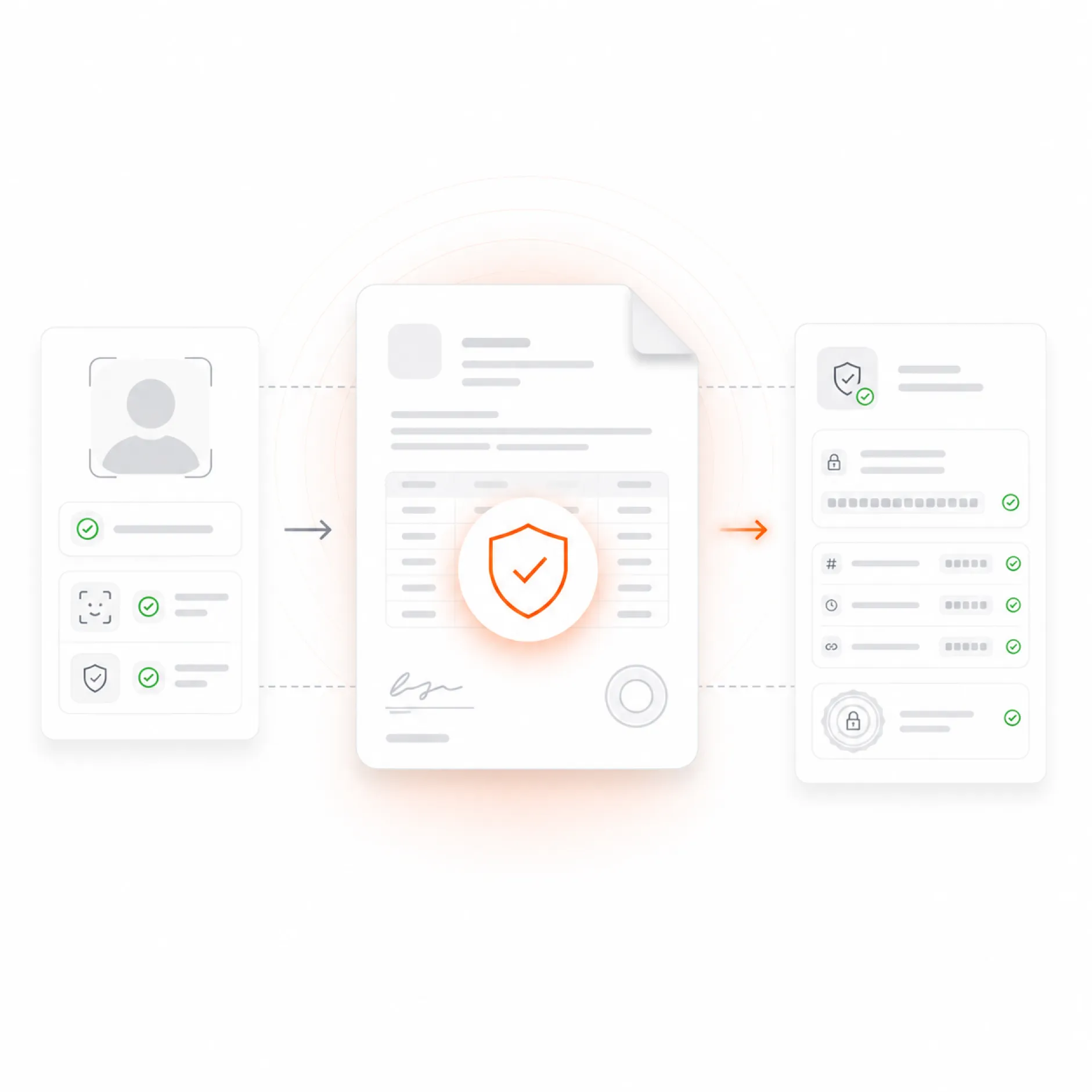
When a document is generated, ekVerify signs it with an ECDSA cryptographic signature embedded in a QR code. Triggered via a single API call from the issuing system.
02
Any receiving party — a bank, lender, or employer — scans the QR. ekVerify returns Valid, Tampered, or Expired in milliseconds.
03
Any change to any field in the document — even a single character — invalidates the cryptographic signature. Indistinguishable forgery is mathematically impossible.
04
One API integration. The issuing institution’s document generation workflow is unchanged. Only the QR is added.
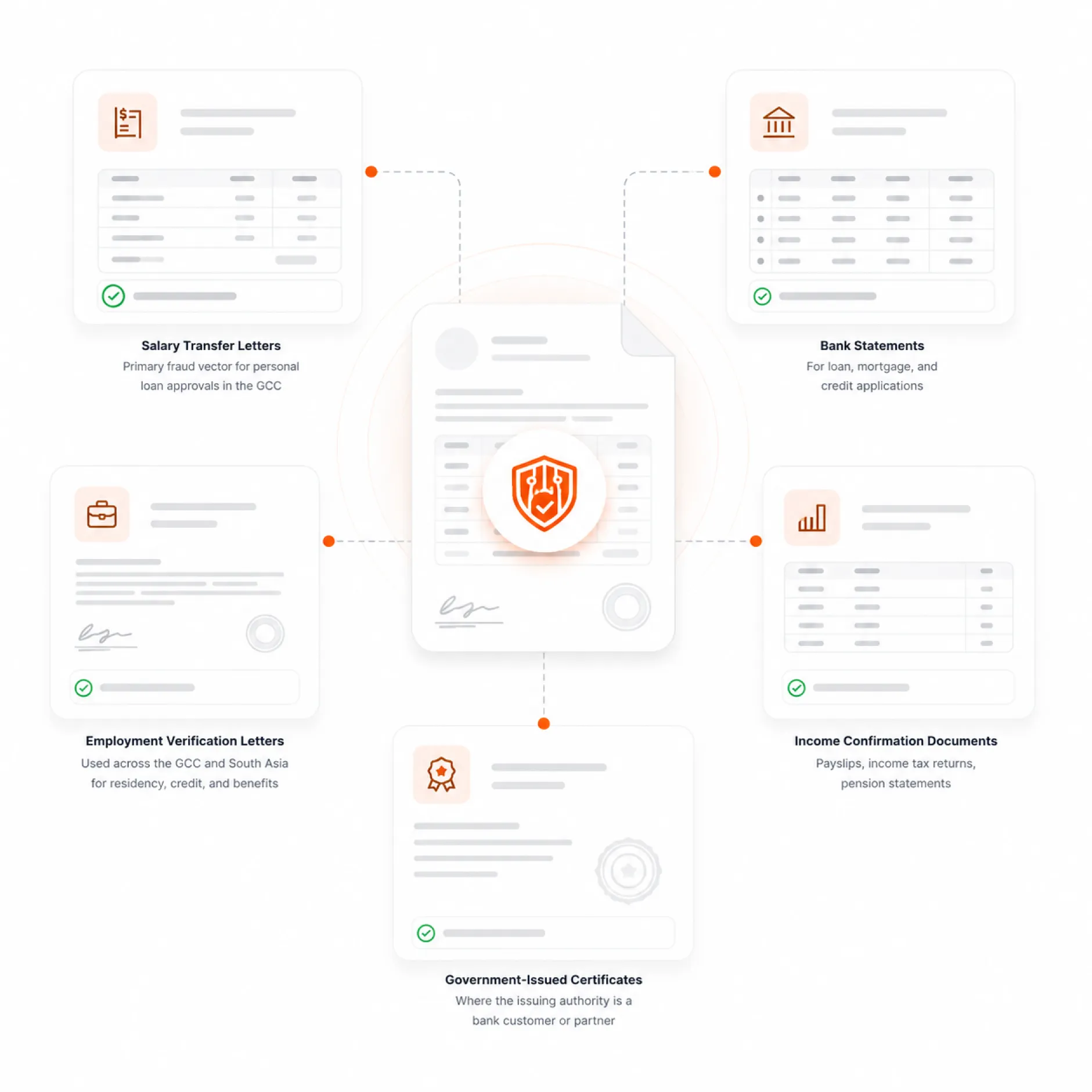
Income confirmation documents
Payslips, income tax returns, pension statements
Government-issued certificates
Where the issuing authority is a bank customer or partner
Salary Transfer Letters
The primary fraud vector for personal loan approvals in the GCC. ekVerify closes this vector entirely.
Bank statements
For loan, mortgage, and credit applications
Employment verification letters
Used across the GCC and South Asia for residency, credit, and benefits
Supported Document Types
Integration Notes
Integration
ekVerify integrates via REST API. The signing call is triggered at the point the document is generated by the bank’s existing system — no changes to document templates or downstream processes. QR verification is available via API (for system-to-system verification) and a mobile-optimised web interface (for human verification flows). Typical integration timeline: 2–4 weeks.
Get Started Today
Talk to us about ekVerify
This page explains the problem, what the regulation requires, and how Ektar solves it.